
Inside the Human Accelerator
How an after-school program built me up and broke me down in ways I'm still processing 8 years later

Eight years ago, I did an after-school program for teenagers interested in tech and The Cognition Academy, aka TCA.
Seemingly no one knows about TCA. People will tell you they went to Stanford within seconds of meeting you. Getting into Y Combinator or the Thiel Fellowships warrants an announcement post on Twitter and LinkedIn. Yet all my friends from TCA rarely mention they were part of it until you really get to know them.
The program still runs today, and most kids in it will rep it proudly. But anyone who did it in the early days has a more complicated relationship with TCA. If anyone asks me how it was, I’ll shrug and say “net-positive” in a way that implies a lot of baggage.
Everything good I have today was downstream of TCA. I’ve had an incredible career in tech for a 23 year old, amazing friends I feel soul-bonded with, and I get to live in San Francisco surrounded by the future.
It also gave me hella anxiety. Some days if I’m not productive enough I feel a burning in my stomach. I had to spend years unlearning that new people aren’t threats or competition but potential homies and collaborators. All of this was probably innate on some level, but TCA definitely amplified it.
I found out about TCA through my cousin, who went to school with the founders: Jason and Jerome. I grew up without much money and, deep-down, was always looking for a way out of my hometown where I felt misunderstood. TCA cost $5000 at the time, but my cousin talked me into it.
He told me, “It’s like private school but one-sixth the cost. The world is run by people who all know each other. If you’re smart and talented but alone, someone who went to the same school as a person who’s hiring will give the job to their friend because they already know them. But if you can meet other smart kids right now, you can call them up later in life when you want something.”
Made sense to me. I applied.
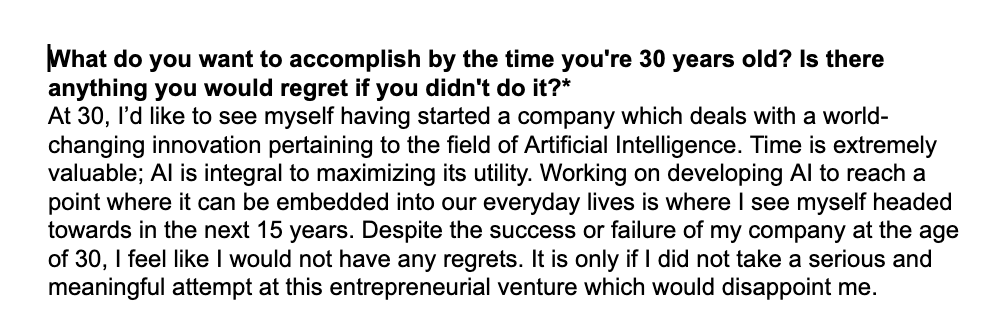
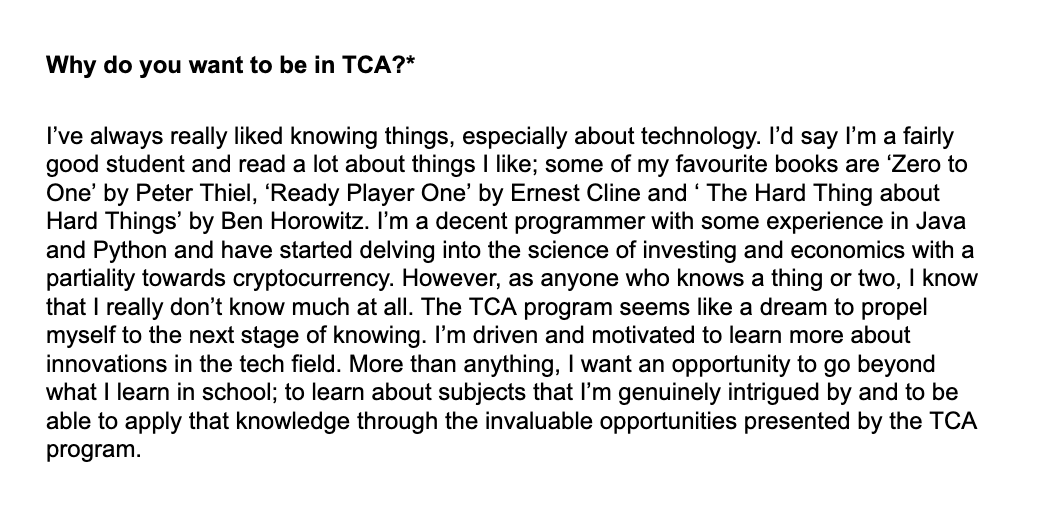
I didn’t even want to do the program that badly until they called me in for an interview. That was the first time I met Jerome.
My TCA interview was the hardest conversation I’d ever had. He asked me a question I’d read in Zero to One but never came up with an answer to: “What important truth do very few people agree with you on?1”
I don’t remember any of the other questions, just the fact that I got absolutely grilled. I was very not used to being asked questions I didn’t know the answer to at that point. If I didn’t know the answer already in school it’s because I didn’t care enough to learn it. But here was a Shaman asking me questions I’d never asked myself, that I wish I had good answers to. What does he know that I don’t? I remember exiting the interview and lying down in the cement stairwell for ten minutes, thinking about how desperately I wanted to learn from him.
That was the first thing I remember wanting so badly that even if they rejected me, I promised myself I’d show up at their office and do whatever it took to make it in. Fortunately it didn’t come to that, and after arguing with my dad to pay for the program, I was in.
Year One: Initiate

My parents don’t know how to swim. But they brought us to the neighbourhood pool every summer hoping we’d figure it out. At some point, my brother taught himself to swim by watching everyone else and then later taught me. I remember starting out in the shallow end, learning to kick and then move my arms, then slowly working up to the deep end when I felt ready.
My parents were pretty gentle and hands off. They trusted that my brother and I would figure it out and gravitate towards what we wanted to do. They had certain expectations and dreams for us of course, but always listened to what we wanted.
We argued a lot, but my brother and I could always get them to relent over time. When I dropped out of college, they were shook of course, but still went along with my plans. I always felt like I pushed myself harder than my parents pushed me. Maybe some part of it was to make them proud, but most of it was to relieve my own boredom and satisfy my curiosity.
Nothing about that way of growing up could’ve prepared me for my first TCA session.
Jason and Jerome always called TCA a human accelerator. Their marketing spiel was roughly this:
Y Combinator takes in startups and pops out better startups, TCA takes in young humans and makes them better. A potential olympic-level swimmer knows what to do. Swim a lot, get a coach, train hard, the path is set. But what if you wanted to be an olympic level innovator? A person who changes the world and impacts a billion people? There’s no plan for that, and that’s where TCA comes in. An olympic level training program for ambitious 13-17 year olds.
The plan for an olympic level founder seemed to start with being thrown into the deep end. Our first session, they told us to form groups and research a technology that was going to be “the next big thing” for two hours, then do a three minute presentation on it.
All was calm until the end of the first presentation. When it was over, the room felt like a firing squad had executed the kids who’d just presented. The founders ripped into them with feedback on delivering a quality presentation.
Jason: “Only 1 person should be presenting. Everyone needs to study Steve Jobs launching the iPhone. He doesn’t bring up the whole team, it’s just him commanding the room.”
Jerome: “Don’t look at your slides. They’re a visual aid for the audience, not a crutch for you. The audience can’t focus on 2 things at once. The slides shouldn’t have notes on them, no one’s going to read them and listen to you. The best slides are just 1 clean image or word.”
Jason: “This isn’t a school project. You can’t read off a script. Memorize what you’re going to say and practice. All of you spent the whole time researching but no one’s going to care about your information if the way you present it is bad.”
After that bomb went off, no one even listened to the other presentations. We were all too busy changing our slides and praying we weren’t called on next. I don’t remember learning a single thing about the next big technology, but I carry those lessons about presenting to this day.
All of this may sound anxiety-inducing, and it was, but I was hooked.
I was a chronically bored kid always looking to be intellectually challenged, and this was it. Like eating spicy food, harsh direct feedback burned so good. The best part of my week for many months was the Sunday TCA session.
A lot of kids in TCA were just trying to pad their college applications, but there were a couple other crazy ones like me. We were obsessed, and had no idea how far it could take us, but lots of us wanted to get as far away from our current situation as possible. We all disagreed with our parents, had big egos, and felt like nobody understood us. TCA treated us not only like adults but made us feel special, and that was all we wanted.
Trust the process

The way TCA was structured was partially to teach you about tech, partially to teach you about yourself and how the world works. Everything revolved around having a Focus i.e. learning about a technology in your spare time by following The Process™.
First you’d Explore. Go through a list of articles and videos about Artificial Intelligence and why it matters. If you like AI, make it your focus. Once you’ve committed to a Focus, do 2 Replicates. Read through a tutorial on how to code something and try to implement it yourself, do that twice. Each time, write a Medium article and make a YouTube video about what you learned. Then a Create. You’ve learned enough, now try to make something of your own.
Throughout the process, we were encouraged to do Focus presentations. “Share what you learned with the class at the beginning of each session. But make it legit. It should feel as though Steve Jobs has been resurrected into the TCA office to teach us about Generative Adversarial Networks.” That was the vibe. There were usually one or two each session, and after a while, some of them were better than presentations at the tech conferences TCA encouraged us to go to.
I remember my first tech conference was Advanced Tech Fest. Everything outside of the Sunday sessions had to be earned. TCA had a bunch of tickets for students, so to earn one, you had to send a 2 minute Loom video about why you felt you deserved to go. Basically everyone got to go, but it still made you feel like hot shit to be “accepted” and make up a reason to skip school for 3 days.
Jason told us, “A conference isn’t about the talks. You can learn anything you want on the internet. Watch those talks on YouTube later. A conference is for networking.”
In a convention hall filled with tech people wearing lanyards and suits, trying to raise money for their startup or hire or invest or make a name for themselves, TCA let loose 100 teenagers who looked like a bunch of chipmunks in trench coats.
TCA had a second year program filled with kids who’d already done The Process and come out better for it. A bunch of them were speaking at this conference and people would mob them afterwards, bewildered that a 14 year old could know anything about augmented reality.
But I was a nobody, and the only adults I talked to were my teachers and parents. So me and all the other new TCA kids just hung out with each other, trying to avoid the scary well-dressed adults.
Then Jason came in to throw us into the deep end again. He’d come into our circle, break it up, tap each of us on the shoulder, point at someone and say “Go.”
The 10 second walk over to a random stranger had my stomach doing backflips. But once I said “Hi I’m Aadil, nice to meet you”, the jitters were mostly off. I did that again and again over the course of 3 days. It never got any less scary, but I didn’t die and people were fairly interested in talking to me, probably on account of me being 16 years old in an environment no 16 year old should be in. But Jason’s shove was effective. I felt better off after the exposure therapy, and learned lots about tech, myself, and the world that week.
A few months later, I threw myself off the deep end willingly.
Dive deeper

“You should only join Velocity if you’re willing to make TCA your number one priority”, Jason told us.
Velocity was like the inner ring of TCA. After 4 months, many of us realized it wasn’t so much of a tech and science after-school program as it was an “everything you thought you knew about the world is wrong” program. Some of us even joked that it was a cult.
Joining Velocity meant getting assigned a set of special tasks to further your development and showing up for sessions an hour early to discuss your progress with everyone in Velocity. Those special tasks were:
studying the “Person of the Week”, anyone from Chamath Palihapitiya to Paul Graham to Socrates
embodying the “Mindset of the Week” like “high standards”, “boss mentality”, or “seeking discomfort”
having a meeting every week i.e. cold messaging or emailing an adult you’d find on LinkedIn and doing a coffee chat with them
At the time, I thought none of it was too difficult. But even today, most of my friends aren’t reaching out to at least one new person each week. Jason said he’d kick people out of Velocity if they didn’t do the tasks2, and he’d call on people randomly to see if they did the requirements. I’ve never been very religious but I prayed to every God that he wouldn’t call on me if I didn’t do the meeting.
A bunch of people quit Velocity, saying they wanted to focus on school or their Focus. But maybe it’s because they couldn’t take the pressure or realized how ridiculous it was.
I wasn’t one of them. I went from the honor roll at school to having the principal’s office call my parents every other day. Not to smoke weed in the bathroom like the other truants, but to write, code, and nap in the library.
I quit the Rugby team, the robotics team, and the school newspaper. I obnoxiously lectured anyone at school willing to talk to me on how they were on the wrong path and there’s so much more to the world than school and playing League of Legends, which I was previously addicted to but had no time for because of how much I was GRINDING on TCA work. It literally became my number 1 priority, and for the most part, I was grateful.
If Velocity was the inner circle, securing an opportunity was the upper Echelon. Anyone could be in Velocity, but you had to be chosen by the founders for an “opportunity”.
So when I got a message from Jerome 5 months in asking if I wanted to go to San Francisco for an AI conference, I literally ran up to him and started nodding furiously. Senpai finally noticed me!
I’d never been on a plane without my parents before. And to San Francisco! The place I read about in the books! It felt like a dream. A couple of 2nd year TCA kids were speaking at this conference, but 3 of us first years got to tag along. Before the conference, we toured the LinkedIn, Twitter, Kitty Hawk and Udacity offices via Jason and Jerome’s friends who worked there.
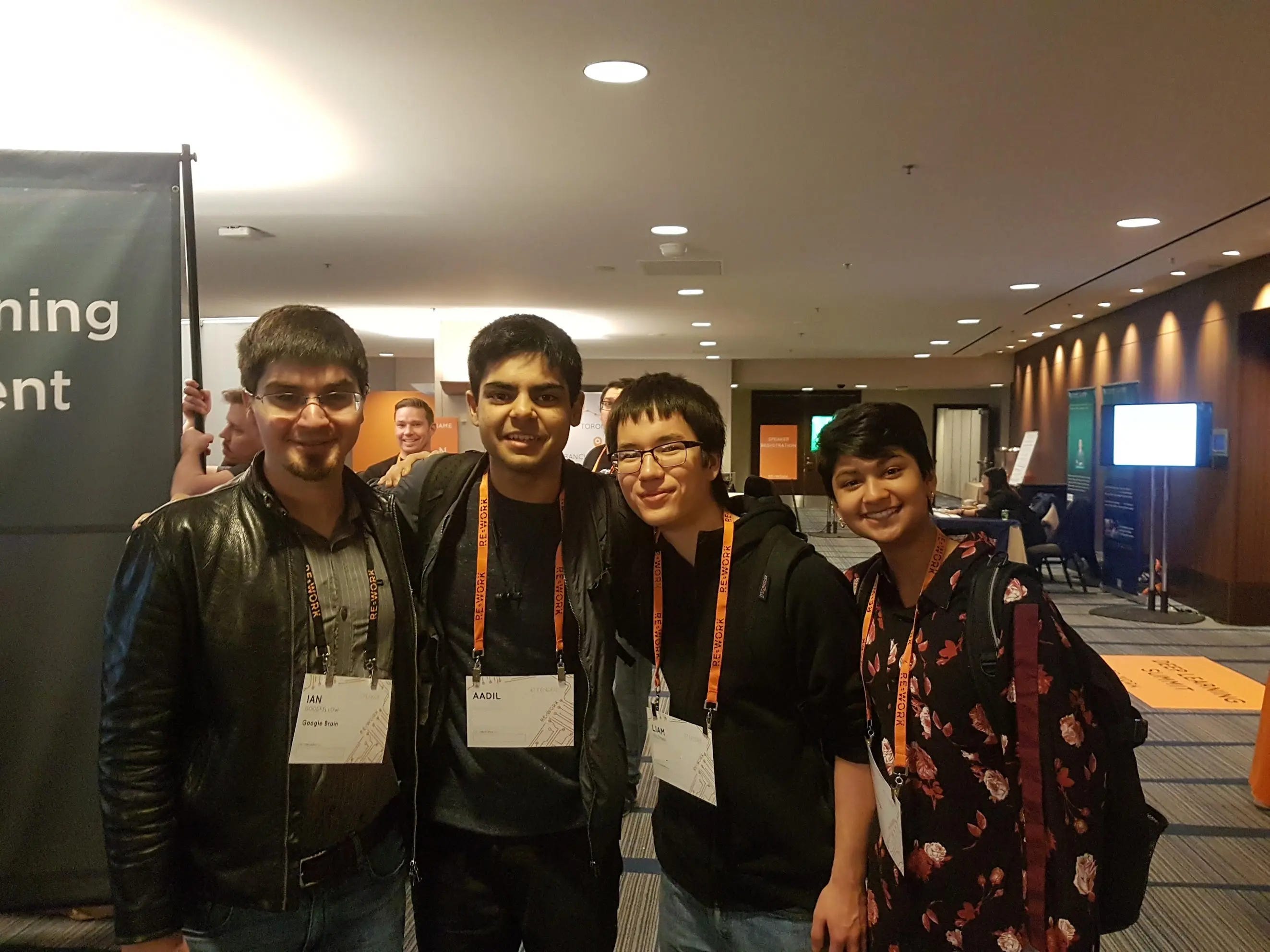
I’d also never felt imposter syndrome until that trip. In the Uber, before going to the offices, Jerome asked us, ”What’s your one-liner?” I didn’t even know what that was. “What’s your quick introduction that makes you worth talking to?”
I struggled to come up with one. After all, why would someone care to talk to me? I’m 16. I barely know how to wipe my own ass. No Silicon Valley professional can reasonably seek to learn or gain anything from me right now. I wondered why they even brought me on this trip, or why anyone was even friends with me.
I wrote a Medium article after that trip. The first time I can ever remember writing for myself. No one told me to write it. I just had so much inside me I wanted to get out.
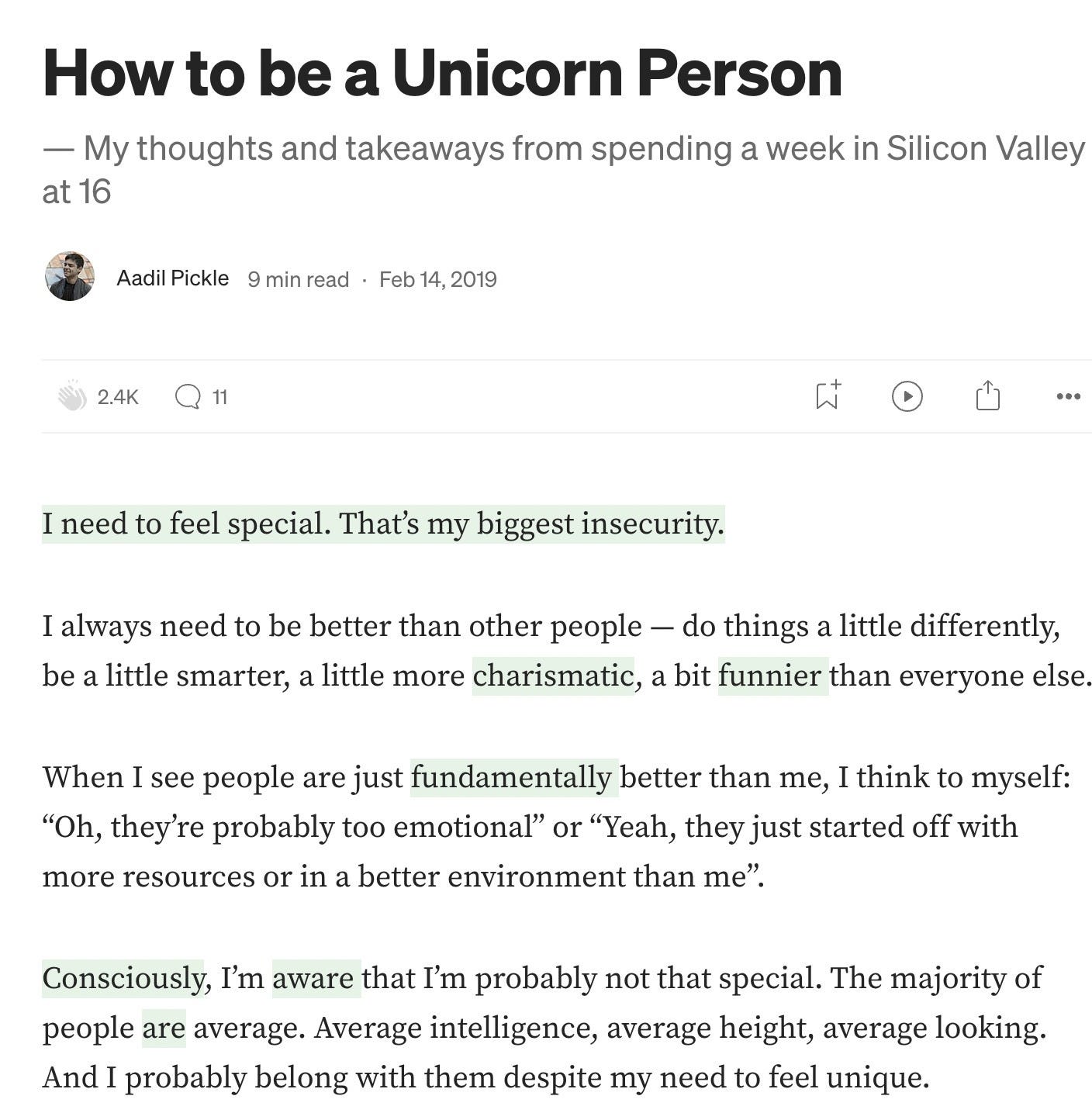
TCA was the start of me writing online3. I wrote daily updates to my close friends in TCA about what I was working on and thinking about. I wrote a monthly newsletter for basically only my mom and nine other people, but sent them to anyone else who subscribed on Mailchimp.
“You know a company has failed if you stop getting their investor updates. You know a person has failed if you stop getting their monthly updates.” Jason told us at a session once.
Looking back, my early work wasn’t bad, and had a stronger voice than much of the stuff I see today. But it also has a certain tightness to it. I didn’t feel like what I was writing about was worth reading, so I eventually stopped publishing for a while outside of what was prescribed by TCA.
Cracked is a double entendre

After the first year of TCA, I got a summer internship. TCA had relationships with a bunch of companies in Toronto, so they brought a bunch of us to a company’s office one day for a “meet and greet”. We sat in a circle and gave our one liners to the company’s general manager, walked around for a bit, some people asked some questions, and we were all out within the hour. A couple days later I got an email that the company chose me and one other student as their interns.
It was complete luck, but I felt like I’d “earned it”. I followed The Process™ after all. I was in Velocity. Surely the people of culture at this company recognized that. I deserved that $14/hour.
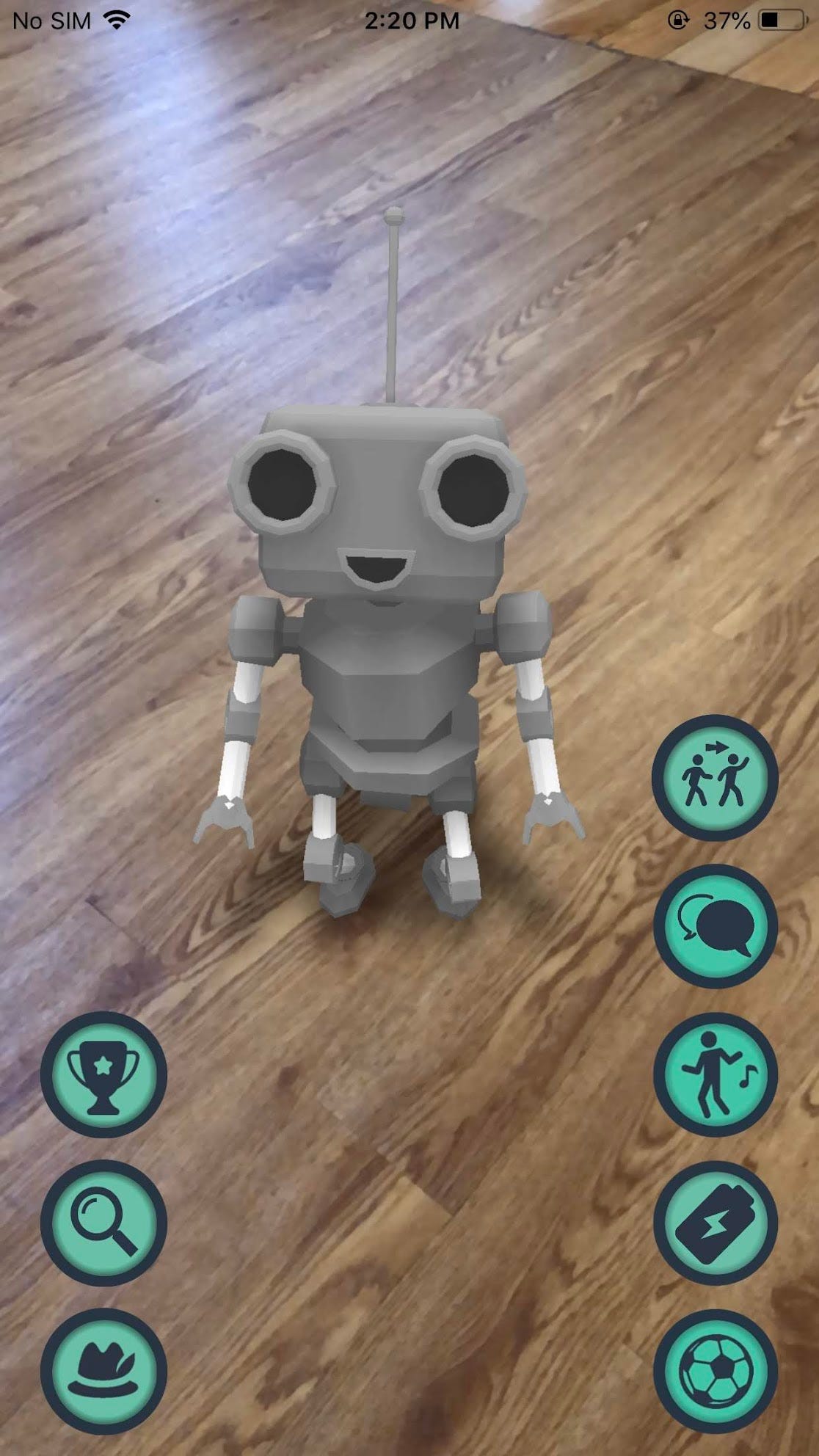
The internship lasted 2 months, and they kind of just left us alone to work on a side project. We made an augmented reality app where you could play with a pet robot that was meant to increase customer loyalty, but no one really cared about. I spent the second month learning how to dropship on Shopify
.The company stopped existing 2 weeks after our internship was over. The most useful thing I remember learning was how most people (don’t) work.
“A 9-5 is maybe 3 hours of work for most people. 9-10 people settle in. 10-11 is work. 11-12 is looking forward to lunch. 12-1 is lunch. 1-2 is maybe some meetings. 2-4 is work. 4-5 is looking forward to going home. 5 they’re out.” Jason told us this before we started our internships, but I really internalized it on the job. He also mentioned to schedule meetings to meet everyone within the first 2 weeks, and to write them thank you cards when you leave4.
That summer was also the first time I felt a sense of belonging. Everyday after our internships were over, all my friends would hang out at the TCA office downtown. I’d never quite fit in anywhere for the previous 16 years, but TCA was where I found my people.
Those are the only friends from my high school days I’m still in touch with, though now they feel more like brothers and sisters. I’d never been to a party before Jessica threw one. I’d never been to a cottage in the summer before Ethan’s. I’d never worked on a project where I felt like an owner and an equal before Ray. I’d never scammed Uber Eats before Brad goaded me into it. I felt my world expand during that summer, and I was finally living. 16 was the first age I felt conscious, in no small part due to the incredible friends I made at TCA.
The more I got into TCA, the more everyone else in my life found me insufferable. I met with the principal once to let me test out of Grade 12 math and have 2 spare periods. He basically laughed in my face and pointed out I had Ds in all my courses. I thought I was too smart for school and there he was, looking at a paper that told him I was an idiot.
I felt alienated because I was putting in work, but no one cared to see it. I grew a dropshipping business to the point of being able to pay college tuition5 and was teaching myself how to code because I knew tech would be so important in the future that anything else was a waste of time.
My ego was so fragile that I’d write off anyone who disagreed with me. I told my Dad I wouldn’t need to get a driver’s license because in five years, all cars would be autonomous. I thought talking to my mom was a waste of time because she wasn’t “intentional” enough. Arrogance was my defence, and it all fell apart after a fight with my brother.
The first time I met my brother’s girlfriend was the summer after TCA. They’ve been together 8 years now, and I still regret that first interaction years later. I was just an absolute asshole to her. Zero social awareness. I grilled her on what she’s passionate about, then called her lazy when she didn’t give me an answer I was satisfied with. Looking back, I realize no answer would’ve satisfied me, because I wasn’t actually trying to get to know her. I just wanted to prove I was smarter than her.
My brother pointed all this out to me, and I just broke. I didn’t want to be that way. I didn’t want to be angry, or arrogant, or alienated, nor did I even realize I was all those things. I actually really liked his girlfriend and thought the meeting went well. I raved about her to my parents afterwards, and nowhere did I see how much I’d hurt her and my brother. The way I talked to them felt normal, because that’s how everyone in TCA talked to each other.
So after that summer, I took a long hard look in the mirror, and decided to chill the f*ck out. People started talking to me at school again slowly. My grades improved since I realized it was probably best to get into a good college even if I ended up deciding against going. I talked to my teachers with respect again, and actually became good friends with some of them.
But I was still in TCA, this time in the second year program. That next year both built me up and tore me down in ways I’d deal with for years after the program ended.
Year Two: Actuate

The founders are brothers, Jason and Jerome Jalali. Jason started a couple startups after college, one got acquired by Square, then he became a VC for a bit before starting TCA. Jerome was a BCG consultant for a couple years. They both went to a great business school in Canada, and their lives were changed in 3rd year when they interned for a microfinance organization in Sri Lanka off of a cold email. They saw how much good there was to do in the world and how few people there were to do it, hence TCA to instill the skills and values in young people to do good for the world.
Like me, Jason and Jerome grew up practicing Ismailism, which is a small sect of Islam of about 30 million people. It’s differentiated by the fact that its leader is still alive just like the Pope. Leadership is passed down through its family, and the leader is called the Imam, or the Aga Khan, who Ismailis treat like God.
Other people couldn’t realize it but I noticed Ismailism was key to the formation of TCA, since many of their slogans and teachings were reminiscent of my time in the religion.
So while all their marketing material talks about tech and startups and science, anyone in the program would tell you that they were obsessed with trying to make everyone into a Unicorn Person™. Like how a unicorn company has a valuation of 1 billion dollars, a Unicorn Person is someone who is capable of impacting 1 billion people. The Aga Khan, with his many charitable organizations, is someone they’d likely consider to be a Unicorn Person (after a while the definition faded and the term was used for anyone who was “legit”).
Year One of TCA was called “Initiate”. It was designed to expose kids to what’s possible with technology. Year Two was “Actuate”, meant to help kids use what they’ve learned about to solve real problems in the world. It was much more focused on impact. Less learning about technology, more learning about how the world works. How economies and governments move and what their incentives are. What life is like for people less privileged than us.
The process in year two was centered around PIEs i.e. Problems Incentivized by Economics. We’d spend three months at a time learning about an industry, finding a problem in it, and pitching a solution that we thought people in that industry would buy. When we focused on the legal industry, I ran a cold email drip campaign to set up calls with lawyers asking about what they did all day and what their biggest pain points were. At the end, we presented our ideas to real lawyers in the legal offices they filmed Suits in.
I really hated this process at the time. Why would I ever randomly need to contact a stranger off LinkedIn just to talk about their job? In hindsight, putting in the cold emailing reps might’ve been one of the highest ROI skills I developed through TCA.
As a college dropout, I’ve made all my friends and gotten all my jobs off of the internet. The bread and butter of an early stage founder is talking to people and finding pain points they’re willing to pay money to have solved. I got so ahead as a 21 year old in the startup scene from these 2 skills alone. Jason’s advice while we were doing PIEs was “just listen to their problems, don’t pitch solutions.” When I moved into tech sales with no experience, those 8 words were more helpful than any of the sales books I read, helping me close 200% of quota with no prior experience.
I’m outta here

I’d chilled out by year two, to the point where I knew there was more to life than becoming a unicorn founder, and that all the propaganda wasn’t worth listening to. I was ready to just take what I liked from the program, and discard what I didn’t.
I slowly wound down my dropshipping business since it wasn’t exciting anymore. I read a lot of philosophy and listened to tech podcasts at 2x, habits I picked up during the first year of TCA. I spent lots of time writing university applications and making YouTube videos.
I had improved. I was smarter, faster at processing, better at speaking in front of a crowd, less afraid. None of it would’ve been possible without TCA. Though I still had this gnawing feeling that I wasn’t doing enough, amplified by seeing all the great things everyone else at TCA was doing.
It was fine. I was protecting my peace. Improving my relationship with my family, and at the end of the program, I gave a presentation to the lawyers that Jason specifically called out as being “authentic” in our group debrief after the experience. He said, “even though he was wrong, he was wrong for the right reasons” when referring to my presentation. I’ll take the compliment, sir. I thought I was past needing the validation at the time, but it still meant so much that I remember it to this day.
Then Covid happened in 2020. TCA took a pause then resumed online. Everything from this time was a blur. TCA Zoom sessions, like virtual high school classes, weren’t nearly as fun. They put us in groups to basically start startups6 and after a while, I just didn’t want to work with my group anymore, so I left. At that point I was done with TCA, ready for the next chapter. So long, and thanks for all the friends.
I was on Twitter now, writing and reading and making side projects and meeting people on the internet who’d become my best friends 4 years later. I had also gotten a full scholarship to study CS and work part time at Shopify. Life was… good?
At a certain point when Covid got a little better, I started meeting up with TCA friends. One of them had networked with a billionaire, and brought up an opportunity for some TCA kids to visit his mansion and help him with some business stuff. She thought I should be part of the squad that went on that trip, especially because I’d helped her scrounge together a website in 10 minutes for the project she pitched him.
Jerome said no. “He hasn’t impressed me enough,” I was told he’d said. My friend insisted that even though the opportunity was off the table, I should let him know what I’ve been up to. I sent him a long text update of my past year, and he basically hit me with the “I ain’t reading all that” meme and said “let’s call.”
We called, and for the first maybe two minutes it was me talking about what I was up to, then the rest of the 28 minutes was him berating me for not doing anything in my second year of TCA. I basically fully dissociated but can vividly recount at some point in the middle he was like “for most of second year, I thought you were a serial masturbator addicted to anime”. I kept that line in my mind because of how ludicrous (and funny years later) it was for a 28 year old man to say that to a 17 year old boy.
I always had the sinking feeling I wasn’t making the most of TCA. I wasn’t working hard enough to become a unicorn person. History would forget me. That call confirmed it in my head, and for months I felt like I was never going to amount to anything. It was also Covid, so I retreated back into my league addiction after being sober for two years, and just… chilled. I had a job and school online but nothing really mattered to me. I’d just talk to my friends, play league, eat and sleep at 5 am. Dark times.
In a weird way, I’m really glad that happened. It broke the spell TCA had cast on me, and since I was so isolated because of Covid, I finally had to think for myself. The boy that emerged from those dark days was still driven by insecurity and arrogance, but at least he didn’t have the pressure of trying to impress his inherited father figures. He could start making his own mistakes.
Epilogue

I’m 23 now, and I still maintain that TCA was a net-positive on my life. I dropped out of college to start a startup with another TCA alum. After leaving that startup, I moved to San Francisco to live in a hacker house with a friend from TCA, who ended up hiring me three months later. My first serious crush was on a girl from TCA. I love my life now, and there’s no way I would’ve gotten here without TCA.
My experience in TCA feels spiritually similar to Alysa Liu’s figure skating journey. Her tiger dad pushed her to the point where she quit because it wasn’t fun anymore. Then she came back on her own, made it fun, and loves it now.
So do you give credit to Alysa’s tiger dad for where she’s at now? You could say his way made her want to quit, but it also set her up for success. Could she have gotten to where she is today and loved figure skating as much as she does without him setting her up since she was three? I don’t think so. Both things had to happen: she had to be pushed, and she had to quit then do it her own way.
In many ways, TCA really lived up to its claim of being a human accelerator. I think my path without TCA would look similar to the one I’d take if it never existed. I was reading Zero to One in the ninth grade and heard of TCA in the 10th. I was already enamoured by the tech world, but TCA had me visit Silicon Valley when I was 16. I wanted to study software engineering and work at Google, but it’s unlikely I would’ve found satisfaction there. I didn’t during my 2 years at Shopify.
I probably would’ve felt lonely in college like I did in high school before TCA. It’s likely I’d have sought out a community that felt more aligned on my own. Knowing my heart now, I find it impossible to think I could’ve been satisfied with the traditional path, even before Jason and Jerome repeated their mantra, “to achieve unconventional success, you have to take an unconventional path.”
Even now, I feel resistance towards calling TCA a cult. I feel compelled to defend it, because it was so formative for my younger self, it’s like I’m defending him. To denounce it publicly would be like scolding my inner child for not being smarter and better earlier, and absolving his role in making me who I am today. I feel like I can’t have regrets about what I did in the past because I like who I am today.
If I admit it was just suffering with no benefit, it’d feel like all those years were wasted. So I focus on the fact that I was in the driver’s seat the whole time. That a human accelerator that must accelerate both the good and bad parts of someone equally. That I’m just looking for a scapegoat for everything wrong with me when I look for the flaws in the TCA process.
It’s so twisted that when a friend asked me if I’d send my kids to TCA, I instantly replied, “HELL NO.” But when he asked if I’d let them do it if they wanted to, I said I would.
Like Alysa Liu, me and my future kids can push ourselves when we want to. We can take breaks if we want to. We can pick our own coaches, and if they choose the directors at TCA, I won’t get involved. The most important thing is that they’re having fun.
In the years after TCA, I realized I don’t need anyone to push me. I’d rather feel drawn towards something rather than pushed. It’s easier to cope with the struggle if I chose it rather than if it was thrust onto me.
I don’t want to be a swimmer. I want to skate at my own pace and make things only I can make, rather than having a blueprint for the kind of person someone else thinks I should be.
Every day in my life is a gift. And I have no desire to skip over its precious moments by accelerating.
Thank you for reading this long ass lore drop. All the names and some pictures are altered for anonymity, I made them up. This one’s for all the dogs I came up with. I couldn’t have made it here without you. Hopefully I did you some justice by putting words to our twisted experience.
After panicking for a bit, I said AI was evil. Very forward thinking of me.
Which I think he only did once, but it was because of a kid failing to meet with someone.
That Medium article still has more views than anything I’ve written on Substack. I met the CEO of Medium at a conference once and he told me he read it and liked it. Validation!
I think this is actually a great tip. I wish I did it for every job since. A lesson I’m still trying to internalize is that everyone carries an invisible sign on them that says “make me feel special”.
In case I went, I wasn’t fully set on opting out.
They called it PIEs but for the real world.
Incredibly entertaining, then will_smith_confused.gif when you realize this isn’t satire
i agree one must Trust The Process but man every time i think about embiid i get so sad